
An Update to Kayagata-sati Sutta

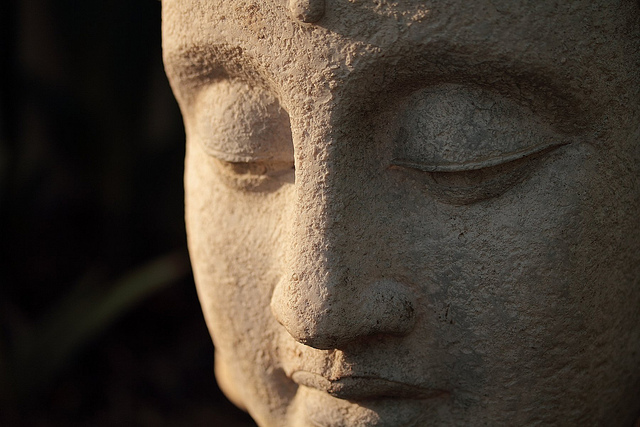
Photograph by Rob Ireton, Creative Commons via Flickr

A statue of the Lord Buddha                                                                                                       Photograph by Rob Ireton, Creative Commons via Flickr

Most Ven. U. Dhammajiva Maha Thero conducts one day meditation programs at Allenmathiniyaramaya on a monthly basis. Presently the Maha Thero conducts Dhamma sermons at these monthly sessions based on Kayagata-sati Sutta.  We are pleased to provide the links to the latest update of the series.

It was recorded on 21 March 2015. Especially the session on Q&A is quite valuable.
Please click here to reach the web page of the Sutta series.

Appamada Desana at Amitirigala

Amitirigala Retreat  Center

Amitirigala Meditation Retreat Center, Amitirigala, Sri Lanka

We are pleased to provide the recordings of Dhamma sessions conducted by Most Ven. U. Dhammajiva Maha Thero at Amitirigala. One day (daytime) meditation retreats were conducted by the Maha Thero from 2010 during certain months of the year at this serene and rural Retreat Center located close to Mitirigala. Kindly note that some of the audio files are incomplete due to incomplete recordings. Some of the talks and discussions may be lost due to not recording. 

The quality of the contents of talks and some of the Q&A sessions are highly valuable to the practitioners of the Path. We will continue to upload more recent talks from Amitirigala in the near future after audio editing.

The next day retreat at Amitirigala will be held on 22 March 2015.
Please click the following links to contact the Organizer and to get directions to the center:

  1. Retreat Organizer’s Details of Amitirigala
  2. How to get to the Amitirigala Retreat Center

Please click here to reach the web page of the audio recordings...

Janussoniya Sutta_Auckland_2015

The Road to the Mountains

The Road to the mountains. Photograph by Vincent, Creative Commons, via Flickr

We are pleased to present a short and yet a precise Sutta of the Lord Buddha. In this Sutta a person of a high cast comes to Buddha and asks whether the value and the benefits of the spiritual Path could be experienced in the present, here and now. In this Sutta the Buddha explains as to how it could be experienced – here and now by the ardent practitioner.

The Path can be experienced as when travelling to the mountains on a straight road

This Sutta was explained by Most Ven. U. Dhammajiva Maha Thero during a three day meditation retreat conducted at Auckland, New Zealand. Please click here to reach the web page of the Sutta

Sālā Sutta_Koralawella_2015

"Ripples". Ripples on the water at Nuwara Wewa, Anuradhapura, Sri Lanka.

“Ripples”. Ripples on the water at Nuwara Wewa, Anuradhapura, Sri Lanka. Photograph by Mr Kosala Bandara, Creative Commons via Flickr

We are pleased to present the recordings from a new one day meditation program conducted at Koralawella, Moratuwa, Sri Lanka. This will be a new monthly series in English and would be conducted by Most Ven. U. Dhammajiva Maha Thero.

This replaces the previous program for the Youth conducted at the same venue. This new program in English is more intensive and focuses on dedicated practitioners, either Young or old. As such the new program was also attended by some dedicated Youth who had developed a regular practice as a result of the previous meditation program for the Youth.
Please click here to reach the web page of the recordings.

An Update to Kayagata-sati Sutta conducted at Allenmathiniyaramaya

Photograph by Rob Ireton, Creative Commons via Flickr

A statue of the Lord Buddha

We are pleased to present a valuable update to Kayagata-sati Sutta conducted at Allenmathiniyaramaya by Most Ven. U. Dhammajiva Maha Thero. It was recorded during a day meditation retreat conducted on 14 February 2015.

The Dhamma talk focused on a valuable way of living based on Ariyawansa Sutta. It was presented as a lesser known ‘Patipada’ or as a way of living conducive to the development of meditation. This talk is both valuable as a historical analysis as well as rejuvenating a simple way of living that was popular among the ancient Sri Lankans. So it has a societal value as well.

The Q&A session was very interesting and it included some questions which were not strictly connected to the meditative practice. The answers given by the Maha Thero demonstrate maturity and a depth of knowledge which is both practical and incisive.

Please click here to reach the webpage of Kayagata-sati Sutta.


Why is it difficult to both understand and accept the Middle Path?

Young Monks at Sunset, Bagan, Burma

Young Monks at Sunset, Bagan, Burma                                                           Photograph by Dany13 via Flickr

We are pleased to provide a new addition to the Instructions in Meditation – Sinhala. This is an audio clip from the 7th Dhamma Talk of Chachakka Sutta of Most Ven. U. Dhammajiva Maha Thero. We have added it as the 13th item for the Advancing Yogis. It is a clip of 30 minutes duration.
Please click here to reach the web page of Instructions in Meditation.

Khagga Visana Sutta_ 2014 – 2015

Rhinoceros_Brian Snelson

The Sutta use the Simile of a lone Rhinoceros                                                  Photograph by Brian Snelson via Flickr

We are pleased to present a valuable Dhamma series being conducted by Most Ven. U. Dhammajiva Maha Thero to the resident Monks of Mitirigala Nissaranavanaya Forest Monastery. This is especially valuable as the series contain some very interesting Dhamma discussions conducted among the Forest monks. The series is currently ongoing.
Please click here to reach the web page of the Sutta

Chachakka Sutta (In Sinhala)

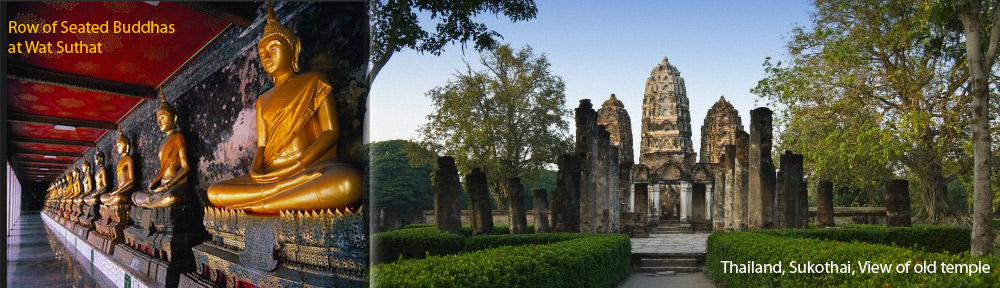
The Line of Buddhas at Wat Pho, Thailand, via Flickr

The Line of Buddhas at Wat Pho, Thailand are admirable at the beginning, admirable at the middle and admirable at the end. 

We are pleased to present yet another important Sutta of the Lord Buddha preached by Most Ven. U. Dhammajiva Maha Thero. The Buddha explained the meaning of Holy Life to us using six sets of sixes in this Sutta. The Buddha introduces the Sutta to us using a beautiful quote as follows;

“Monks, I will teach you the Dhamma admirable in the beginning, admirable in the middle, admirable in the end; I will expound the holy life both in its particulars & in its essence, entirely complete, surpassingly pure — in other words, the six sextets. Listen & pay close attention. I will speak.” (Translated from Pali by Thanissaro Bhikku- accesstoinsight.org)
Please click here to reach the webpage of the Sutta

Sevithabba Sutta (In Sinhala)

A Lotus Flower - Picture taken by 白士 李

A Lotus Flower – Picture taken by 白士 李

We are pleased to present another important Sutta of the Lord Buddha preached by Most Ven. U. Dhammajiva Maha Thero. In this Sutta the Buddha points out three types of people in relation to association for those who wish to progress. The Buddha gave us the following guidelines in relation to those three types of people;

  1. There is a type of a person we should not associate. We should avoid such people as much as possible.
  2. There is another type of person we should associate with. We should try our best to find such people.
  3. There is another type of person who is worthy of veneration and our support/help. We should find and venerate/support/help such esteemed people.

Please click here to reach the webpage of this valuable Sutta discourse.

Vipaththi Sutta

Let the Dhamma be a Lighthouse during 2015!

Let the Dhamma be a Lighthouse during the year 2015! 

At the dawn of the year 2015, we are quite pleased to present a valuable Sutta discourse which is like a Lighthouse to a weary Sailor! Lighthouses guide the Sailors through stormy nights and help them to avoid perils of the rough seas. Similarly the following Sutta discourse will help us to reach safety travelling through the unending sea of Samsara. It is especially relevant to Sri Lankans in the present context.

The Sutta explains about Sila Vipaththi (සීල විපත්ති), Chitta Vipaththi (චිත්ත විපත්ති) and Dhitti Vipaththi (දිට්ඨි විපත්ති) and elaborates further as to how those could become Sila Sampaththi (සීල සම්පත්ති), Chitta Sampaththi (චිත්ත සම්පත්ති) and Dhitti Sampaththi (දිට්ඨි සම්පත්ති).  Please click here to reach the webpage of the Sutta